The world of connectivity is evolving faster than ever, and at the heart of this transformation is 5G technology. From supercharged internet speeds to the seamless integration of smart devices, 5G is redefining how we interact with the digital world. But what exactly makes 5G so revolutionary? How does it impact our daily lives and industries worldwide? In this article, we break down the essence of 5G, its applications, and the future it promises.
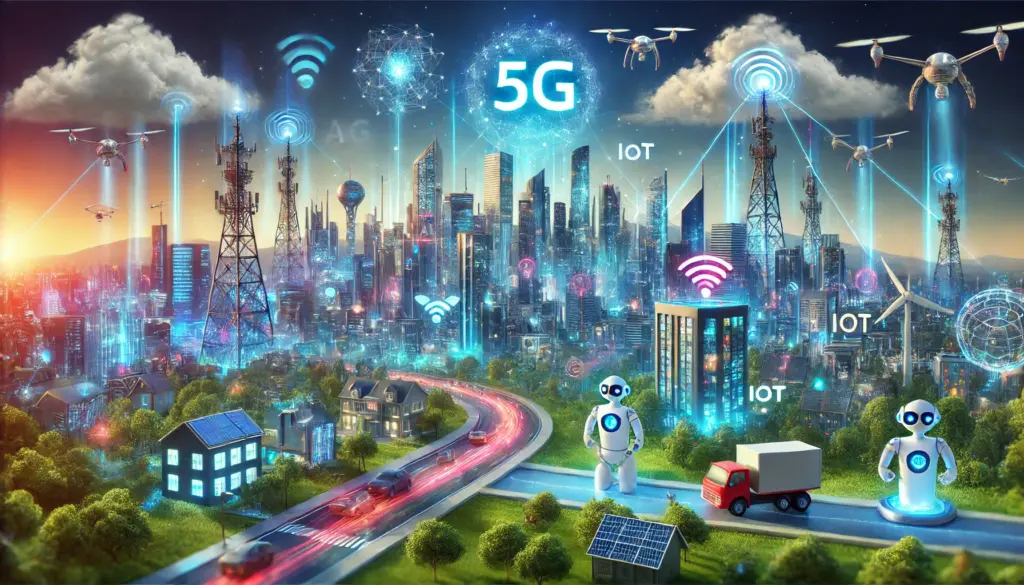
What is 5G and How Does It Work?
At its core, 5G (Fifth Generation) technology is the latest advancement in wireless communication, succeeding 4G LTE. Unlike its predecessors, 5G offers ultra-fast speeds, low latency, and massive connectivity. By utilizing higher frequency radio waves, known as millimeter waves (mmWave), it delivers data at lightning speeds with minimal delays. Additionally, 5G networks rely on small cell technology, allowing better coverage even in densely populated areas.
Key features of 5G:
- Blazing Fast Speeds: Capable of reaching up to 10 Gbps, 5G is 100 times faster than 4G.
- Ultra-Low Latency: Reduces response time to as low as 1 millisecond, making real-time applications more effective.
- Massive Device Connectivity: Can support millions of connected devices per square kilometer, enabling the Internet of Things (IoT).
How 5G is Transforming Industries
1. Smart Cities and IoT Expansion
With the rapid expansion of IoT (Internet of Things), 5G plays a crucial role in developing smart cities. Traffic management, energy distribution, and public safety all benefit from real-time data exchange, reducing congestion, improving efficiency, and enhancing security. Countries like South Korea and Singapore are already implementing 5G-enabled smart infrastructures.
2. Revolutionizing Healthcare
The medical field is undergoing a dramatic shift with 5G-powered telemedicine, robotic surgeries, and remote patient monitoring. Doctors can conduct high-resolution virtual consultations, while AI-driven diagnostics operate with higher accuracy and speed. This technology is especially beneficial in rural areas where healthcare access is limited.
3. Enhancing Entertainment & Gaming
Streaming and gaming industries are pushing boundaries with 5G. Ultra-fast connectivity eliminates buffering, enabling 8K video streaming, augmented reality (AR), and virtual reality (VR) experiences. Cloud gaming services like Google Stadia and Xbox Cloud Gaming leverage 5G for seamless gameplay without lag.
4. Autonomous Vehicles and Smart Transportation
Self-driving cars rely heavily on instant data communication to operate safely. With 5G, vehicle-to-vehicle (V2V) and vehicle-to-infrastructure (V2I) communication becomes more efficient, reducing accidents and improving traffic flow. Companies like Tesla and Waymo are already integrating 5G technology into their autonomous vehicle systems.
5. Business and Remote Work
The way we work has been reshaped by 5G-powered cloud computing, AI integration, and enhanced video conferencing. Businesses can operate globally with seamless communication, reducing lag in international meetings and increasing overall efficiency in remote work setups.
Frequently Asked Questions About 5G
Q1: Is 5G available worldwide?
Yes, but its availability varies. Major cities in the U.S., Europe, and Asia have active 5G deployments, while rural areas are still expanding coverage.
Q2: Will 5G replace Wi-Fi?
Not entirely. While 5G offers superior speeds, Wi-Fi remains essential for localized networks. Both technologies are expected to coexist and complement each other.
Q3: Is 5G safe?
Yes. Extensive research by organizations like the World Health Organization (WHO) and the FCC confirms that 5G radiation is within safe limits and poses no known health risks.
Q4: How does 5G impact battery life on smartphones?
5G consumes more power than 4G, but newer devices are optimized with efficient chips and AI-powered battery management to offset this issue.
Final Thoughts: The Future with 5G
The rise of 5G technology marks a new era of global connectivity, transforming industries, businesses, and daily life. From smart cities and telemedicine to cloud gaming and self-driving cars, 5G is paving the way for a more connected, efficient, and innovative world. While challenges such as infrastructure expansion and affordability remain, the future looks promising as 5G continues to evolve.
Are you ready for the 5G revolution?

Penulis di Ascendory yang fokus membantu pembaca naik level lewat teknologi,
pengembangan diri, dan strategi bisnis online yang praktis. Suka eksplorasi tools
produktivitas, tren digital, dan cara menyeimbangkan hidup biar tetap waras meski
sibuk. Percaya bahwa kemajuan kecil yang konsisten lebih ampuh dari semangat
sehari yang langsung padam.