Remember when people used to joke that the cloud is just someone else’s computer? Well, that ship has sailed. Today’s cloud is a global infrastructure powerhouse, driving innovation, scalability, and agility for businesses of all sizes. Whether you’re a developer, startup founder, or IT leader, understanding where cloud computing is headed is crucial to staying competitive.
Why the Cloud Isn’t Just “Someone Else’s Computer” Anymore
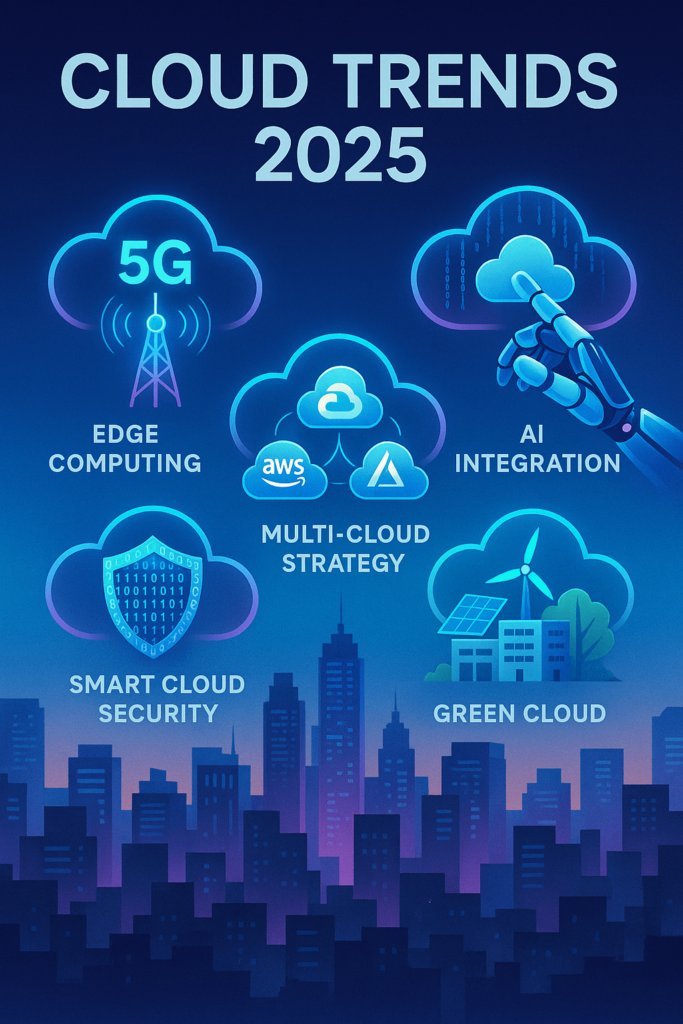
In this article, we’ll explore 5 must-know trends in cloud computing that are already reshaping the tech landscape. These aren’t just buzzwords—they’re the backbone of the future. Let’s dive in.
1. Edge Computing Is Moving Closer to You
What’s Happening?
Edge computing is becoming a game-changer. Instead of relying solely on centralized cloud servers, edge computing processes data closer to the source—think IoT devices, smart sensors, and local nodes.
Why It Matters
Latency is the enemy of real-time applications. In areas like autonomous vehicles, healthcare monitoring, or augmented reality, a split-second delay can mean the difference between smooth performance and disaster.
Real-World Example
Amazon Web Services’ AWS Wavelength enables ultra-low-latency apps by placing compute resources at the edge of 5G networks. Companies like Verizon and Vodafone are already leveraging this for next-gen apps.
2. AI and Cloud: The New Power Couple
The Shift
Cloud computing is rapidly becoming the foundation for artificial intelligence. More businesses are training machine learning models in the cloud thanks to powerful GPU infrastructure and scalable data storage.
What This Means for You
With tools like Google Cloud AI, Azure Machine Learning, and Amazon SageMaker, even small teams can access enterprise-level AI capabilities. This democratization means that AI isn’t just for tech giants anymore.
Hot Use Case
Retail companies are combining cloud-based AI with customer behavior data to deliver hyper-personalized shopping experiences in real time.
3. Multi-Cloud Strategy is the New Normal
What’s Driving This Trend?
Businesses are no longer putting all their eggs in one cloud basket. Instead of being locked into AWS, Google Cloud, or Azure, many are adopting a multi-cloud strategy—using different providers for different needs.
Benefits
- Redundancy: Less downtime risk.
- Flexibility: Choose the best services from each provider.
- Cost Optimization: Avoid vendor pricing traps.
Quick Insight
According to Flexera’s 2024 State of the Cloud Report, 89% of enterprises now have a multi-cloud strategy in place.
4. Cloud Security Is Getting Smarter, Not Just Stronger
The Evolution
As cloud usage grows, so do cyber threats. But the good news is: cloud security tools are becoming smarter with the help of AI, automation, and real-time analytics.
What You’ll See More Of
- Zero Trust Architectures
- Automated Compliance Monitoring
- Behavior-Based Threat Detection
Example in Action
Microsoft Defender for Cloud now uses machine learning to detect abnormal patterns, helping businesses prevent threats before they strike.
5. Sustainable Cloud is More Than a Buzzword
The Green Cloud Movement
Sustainability is no longer optional. Cloud providers are under increasing pressure to reduce carbon emissions and operate data centers with cleaner energy sources.
How It Affects You
Choosing a sustainable provider isn’t just good PR—it can reduce your organization’s environmental footprint and align with ESG goals.
Who’s Leading the Way?
- Google Cloud: Claims to operate on 100% renewable energy.
- Azure: Aims to be carbon negative by 2030.
- AWS: Committed to powering all operations with 100% renewable energy by 2025.
Conclusion: The Future is Cloud-First—Are You Ready?
Cloud computing is no longer a “nice-to-have.” It’s the foundation of innovation, agility, and growth in the digital age. Whether it’s edge computing bringing speed, AI adding intelligence, or sustainability driving change, these trends are not just shaping the future—they’re already here.
So what’s next?
Start by evaluating your current cloud setup. Are you relying on a single provider? Is your architecture future-ready? It might be time to rethink your cloud strategy to stay ahead of the curve.
Call-to-Action
Curious how your business can benefit from these trends?
Start by subscribing to our newsletter for more insights, or schedule a free consultation with our cloud experts to explore tailor-made strategies for your infrastructure.

Penulis di Ascendory yang fokus membantu pembaca naik level lewat teknologi,
pengembangan diri, dan strategi bisnis online yang praktis. Suka eksplorasi tools
produktivitas, tren digital, dan cara menyeimbangkan hidup biar tetap waras meski
sibuk. Percaya bahwa kemajuan kecil yang konsisten lebih ampuh dari semangat
sehari yang langsung padam.