Think you’re caught up with the latest tech? Think again. While everyone’s still talking about AI-generated selfies and smart homes, there are breakthroughs happening right now that sound like science fiction—but they’re very real. Some of these innovations are reshaping entire industries, while others are quietly seeping into everyday life, changing the way we think, learn, work, and connect.
The Future Is Already Here (And It’s Wilder Than You Think)
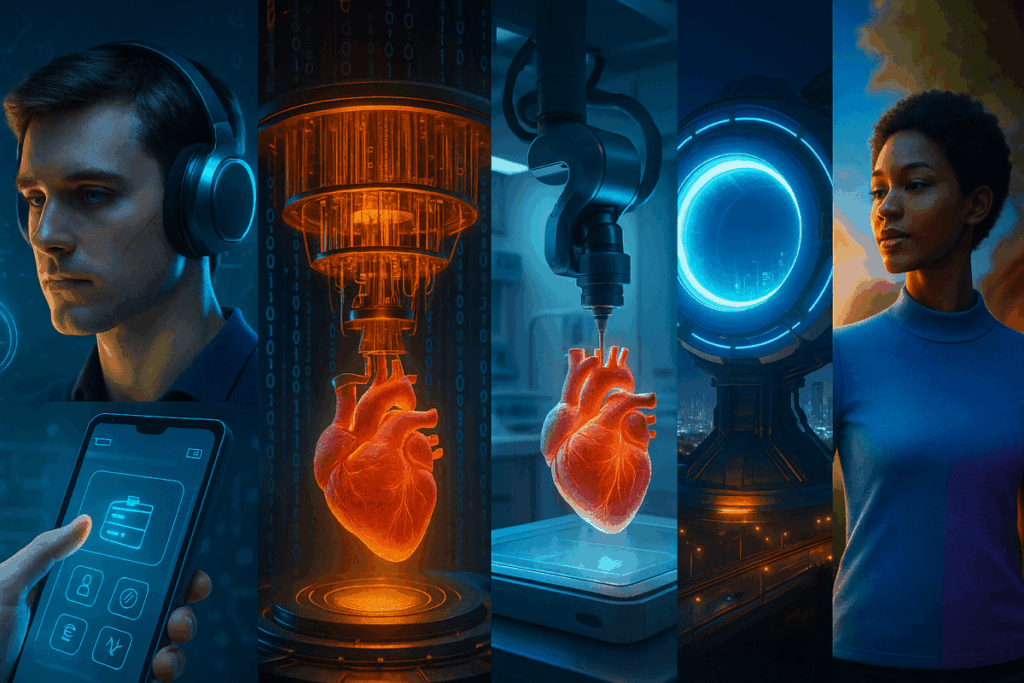
In this article, we’re diving into five emerging technologies that are not only futuristic but mind-blowingly transformative. Whether you’re a curious reader, a startup founder, or someone planning a future-proof career, these technologies are worth watching.
1. Brain-Computer Interfaces (BCIs): Control With Your Mind
What is it?
Brain-computer interfaces (BCIs) allow direct communication between your brain and a device—no keyboard, no voice commands, just pure thought. Yes, really.
Why it matters
Companies like Neuralink and Synchron are pushing the limits of neurotechnology. Their goals? Helping people with paralysis control computers, enabling faster communication, and possibly enhancing cognitive abilities in the future.
Real-life example
In 2023, a paralyzed patient successfully sent a tweet just by thinking it, thanks to a BCI implant. As the technology advances, applications could range from healthcare to gaming to education.
2. Quantum Computing: The Next Frontier of Speed
What is it?
Quantum computers use the principles of quantum mechanics to process information in ways that classical computers simply can’t. They operate using qubits, which can represent both 0 and 1 simultaneously.
Why it matters
Quantum computing can solve complex problems that are practically impossible for today’s supercomputers, like simulating molecular reactions or optimizing massive supply chains in seconds.
Real-life example
IBM and Google are racing to build functional quantum processors. In 2023, IBM’s Osprey quantum system reached 433 qubits, and their roadmap promises even larger systems soon.
3. Bioprinting Human Organs: 3D Printing Goes Biological
What is it?
Bioprinting uses 3D printing techniques to create living tissue, layer by layer, using bio-ink made of living cells. The ultimate goal: printing human organs for transplant.
Why it matters
Organ shortages are a global crisis. Bioprinting could revolutionize organ transplants, reduce wait times, and eliminate the risk of rejection by using a patient’s own cells.
Real-life example
In 2022, researchers successfully 3D-printed a miniature human heart using living cells. While full-sized organ printing is still years away, the groundwork is being laid right now.
4. Energy from Nuclear Fusion: Powering the Planet Cleanly
What is it?
Unlike current nuclear power that splits atoms (fission), nuclear fusion combines atoms to generate energy—the same process that powers the sun. It’s extremely powerful and emits zero carbon emissions.
Why it matters
Fusion could provide nearly limitless, clean energy without long-lived radioactive waste. It’s the holy grail of sustainable power.
Real-life example
In December 2022, U.S. scientists achieved a major breakthrough: producing more energy from a fusion reaction than was used to initiate it. While commercial fusion is still under development, this was a historic milestone.
5. Smart Materials: Matter That Thinks
What is it?
Smart materials can respond to changes in their environment—like temperature, pressure, or light—by altering their properties. Think fabrics that change color with heat or windows that adjust transparency with sunlight.
Why it matters
These materials are being used in wearables, aerospace, architecture, and even military applications. Imagine clothes that adapt to the weather or buildings that self-heal after damage.
Real-life example
In 2023, MIT researchers developed a “programmable matter” that can fold itself into different shapes. It’s early, but the possibilities are endless—from self-repairing surfaces to adaptable devices.
Final Thoughts: Innovation Is Closer Than You Think
Each of these technologies might sound like they belong in a sci-fi movie, but they’re quietly becoming reality. While some are still in development stages, others are already changing how we live and think. The key takeaway? Staying informed about emerging tech isn’t optional anymore—it’s essential for navigating the future.
So, What Should You Do Next?
- Curious learners: Follow key research labs and emerging tech news platforms like MIT Tech Review or SingularityHub.
- Entrepreneurs: Start thinking about how these innovations might disrupt your industry.
- Students or job seekers: Explore careers aligned with these growing sectors—biotech, quantum computing, renewable energy, and more.

Penulis di Ascendory yang fokus membantu pembaca naik level lewat teknologi,
pengembangan diri, dan strategi bisnis online yang praktis. Suka eksplorasi tools
produktivitas, tren digital, dan cara menyeimbangkan hidup biar tetap waras meski
sibuk. Percaya bahwa kemajuan kecil yang konsisten lebih ampuh dari semangat
sehari yang langsung padam.