If the last ten years have taught us anything, it’s that technology evolves faster than we expect. Smartphones, social media, and cloud computing have gone from futuristic concepts to everyday essentials in less than a generation. Now, as we enter the next decade, a fresh wave of emerging technologies is poised to reshape the way we live, work, and connect. From artificial intelligence that mimics human decision-making to biotechnology that redefines health, these innovations are not just incremental improvements—they are game-changers.
A Decade of Radical Transformation
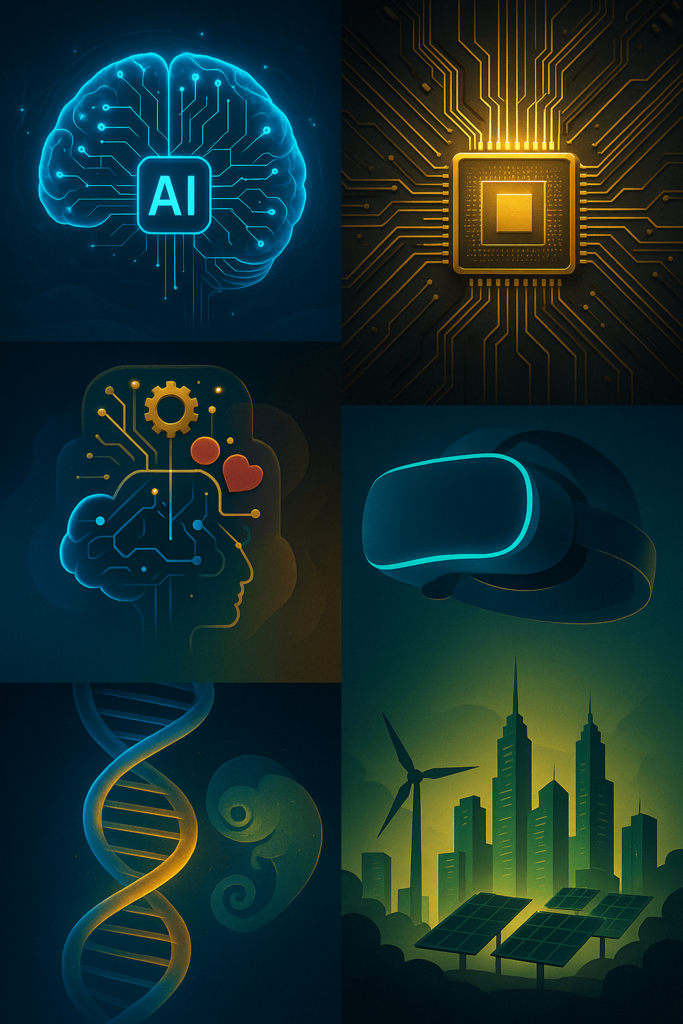
In this article, we’ll explore five groundbreaking tech trends you should keep your eyes on. The tone is simple, engaging, and designed to spark curiosity—because the future isn’t just arriving, it’s already here.
1. Artificial Intelligence and the Rise of Everyday Automation
The Shift from Tools to Teammates
Artificial intelligence (AI) is no longer confined to research labs or big tech companies. It’s quietly making its way into your daily life—whether through voice assistants like Alexa, AI-powered grammar checkers, or recommendation algorithms on Netflix and Spotify.
But what’s next? The coming decade will see AI evolving from being just a tool into something closer to a teammate. Imagine AI systems that can co-write business strategies, predict medical conditions before symptoms appear, or even handle complex legal contracts.
Real-World Example
Take ChatGPT-style AI assistants: in the next decade, they won’t just answer queries—they’ll act like personalized digital employees, managing schedules, analyzing data, and even brainstorming creative ideas.
Why It Matters
The automation potential here is massive. According to McKinsey, AI could contribute $13 trillion to the global economy by 2030, transforming entire industries along the way.
2. Quantum Computing: Breaking the Limits of Classical Machines
Beyond Speed—It’s About Possibility
While today’s computers are powerful, they still follow classical rules. Quantum computing, however, flips those rules on their head. Instead of using bits that are either 0 or 1, quantum computers use qubits that can exist in multiple states simultaneously.
The Impact
This isn’t just about making your laptop faster. Quantum computing has the potential to solve problems that classical computers can’t even touch—such as modeling complex molecules for drug discovery or optimizing global supply chains with millions of variables.
Storytelling Perspective
Picture this: in the 1990s, the Human Genome Project took 13 years and billions of dollars. With quantum-enabled simulations, similar mapping could take just weeks.
Why It Matters
Companies like IBM, Google, and startups such as Rigetti are racing to make quantum computing commercially viable. The decade ahead could finally see its shift from theoretical promise to real-world disruption.
3. Biotechnology and Personalized Health
From “One-Size-Fits-All” to Tailored Therapies
Medicine is moving away from generic treatments toward personalized healthcare—where therapies are designed for your specific DNA, lifestyle, and environment. Advances in CRISPR gene editing, biotech wearables, and nanomedicine are at the heart of this transformation.
Example: Gene Editing
CRISPR technology has already been used to successfully treat certain genetic diseases in clinical trials. By the 2030s, we may see widespread therapies for conditions like sickle cell anemia, blindness, or even certain types of cancer.
Data Storytelling
According to a report by Global Market Insights, the biotech sector is expected to surpass $3.4 trillion by 2030. That’s not just an economic shift—it’s a human shift, promising longer, healthier lives.
Why It Matters
This trend goes beyond medicine. Imagine agriculture where crops are designed to resist drought, or food designed at a molecular level to be healthier and more sustainable. Biotechnology will redefine not just health, but life itself.
4. Immersive Tech: The Metaverse, AR, and VR
Beyond Entertainment
The buzz around the metaverse might seem like hype, but immersive technologies like augmented reality (AR) and virtual reality (VR) are steadily moving from gaming into serious industries.
Practical Applications
- Education: VR classrooms where students can explore the solar system or historical battles.
- Healthcare: Surgeons using AR overlays for real-time guidance during complex operations.
- Business: Virtual offices where employees “meet” in shared 3D spaces.
Storytelling Hook
Think about remote work during the pandemic. Video calls kept us connected, but imagine if you could walk into a virtual office lobby, shake hands with a colleague’s avatar, and collaborate on a project in real time. That’s the future immersive tech promises.
Why It Matters
By 2030, AR and VR could generate $1.5 trillion in value, according to PwC. This isn’t just about new gadgets; it’s about redefining how humans experience reality.
5. Sustainable Innovation: Green Tech Leading the Future
Climate Meets Technology
The future of technology can’t be separated from the future of the planet. Green innovation is becoming one of the most important drivers of emerging tech.
Examples of Green Tech
- Renewable Energy: Solar panels with higher efficiency and cheaper production.
- Smart Grids: AI-powered systems that optimize energy use across cities.
- Carbon Capture: Machines that literally pull CO₂ out of the air.
Storytelling Insight
In Iceland, for instance, projects like Climeworks are already capturing thousands of tons of carbon annually. In the next decade, such systems could scale globally, turning climate challenges into opportunities for innovation.
Why It Matters
The combination of sustainability and technology ensures not only business growth but also survival. Companies investing in green tech aren’t just future-proofing their profits—they’re future-proofing humanity.
Conclusion: The Next Decade is Already Unfolding
Emerging technologies are not isolated innovations; they are threads weaving into a much larger tapestry. Artificial intelligence is amplifying human capability, quantum computing is solving the unsolvable, biotechnology is personalizing health, immersive tech is redefining connection, and green innovation is saving our planet.
For businesses, policymakers, and individuals, the challenge is not whether these technologies will arrive—they already have. The real question is: how prepared are you to adapt, adopt, and thrive in this new era?
Call to Action
The next decade will reward those who stay curious, informed, and adaptable. Whether you’re a student, entrepreneur, or decision-maker, start exploring these technologies today. Dive deeper into AI tools, read about quantum breakthroughs, or simply keep an eye on biotech and green innovations.

Penulis di Ascendory yang fokus membantu pembaca naik level lewat teknologi,
pengembangan diri, dan strategi bisnis online yang praktis. Suka eksplorasi tools
produktivitas, tren digital, dan cara menyeimbangkan hidup biar tetap waras meski
sibuk. Percaya bahwa kemajuan kecil yang konsisten lebih ampuh dari semangat
sehari yang langsung padam.